
Dangers and diseases of rats - Rodent-borne diseases: you don't even have to come into contact with the rodent to catch diseases, an intermediary alone is enough.

Rodents, particularly rats and mice, can be dangerous. They carry all kinds of germs as well as some of their parasites and can leave them behind in their droppings and urine.
Humans can also catch diseases by eating food or drinking water contaminated with rodent urine or feces. Unfortunately, you cannot always tell if a food source has been contaminated by a rat or a mouse. What diseases can you catch this way? The best known are hantavirus pulmonary syndrome, hemorrhagic fever with renal syndrome, and salmonellosis.
Rats and mice carry pathogens and other bacteria that can cause serious health problems for humans and even pets. Due to their nature, rodents can carry millions of harmful microbes in their bodies and cause serious infections and diseases to unsuspecting humans.
To catch diseases from a mouse or rat, you don't even have to come into contact with the rodent. All you have to do is breathe in airborne dust that is contaminated with rodent droppings or urine. This includes hantavirus pulmonary syndrome.

Hantavirus pulmonary syndrome

A 26-year-old Canadian woman from the Prairie region was admitted to the intensive care unit due to acute respiratory distress. She was previously in good health and had no significant medical history other than two normal pregnancies and deliveries; she had no allergies, no family history of asthma, and no history of trauma. About a week prior to her admission, she began feeling unwell, reporting a headache and a low-grade fever. The day before her admission, she began having a dry cough, followed by progressive shortness of breath. Upon rigorous questioning, her husband stated that the only unusual activity his wife had engaged in about two weeks before the onset of symptoms was cleaning their old garage, which she had completely cleared out before vacuuming it. She had commented at the time on the abundance of mouse droppings in the garage. An astute clinician sent blood samples to the National Microbiology Laboratory for hantavirus diagnostic testing. Despite intensive mechanical ventilation and conscientious fluid administration, the woman eventually developed considerable pulmonary edema, went into shock, and died 24 hours after admission. Her Sin Nombre virus infection was established by serological and molecular tests, thereby confirming that she had contracted hantavirus pulmonary syndrome.
Hantavirus pulmonary syndrome is a rare respiratory disease associated with the inhalation of rodent excreta (urine and feces) that have become aerosolized and are contaminated with hantavirus particlesFootnote 1 Footnote 2. Until recently, only four to six cases of hantavirus pulmonary syndrome were diagnosed each year in Canada. Most cases occurred in Alberta, but cases have also been reported in British Columbia, Saskatchewan, Manitoba, and QuebecFootnote 3 Footnote 4. Over the past two years, there has been a significant increase in the total annual number of hantavirus pulmonary syndrome cases diagnosed in Canada. All cases occurred in rural areas, and approximately 70 % of the cases were associated with domestic or agricultural activities.
The purpose of this article is to review the clinical picture and laboratory diagnosis of hantavirus pulmonary syndrome and to describe the epidemiological trends observed in Canada from 1994 to 2014.
Although four hantavirus species have been designated as etiologic agents of hantavirus pulmonary syndrome in North AmericaFootnote 5, the Sin Nombre virus is most frequently associated with this syndrome in Canada and the United States, and its primary reservoir is the deer mouse, Peromyscus maniculatus Footnote 3 Footnote 6.

Sin Nombre virus

The Sin Nombre virus belongs to the hantavirus genus (family Bunyaviridae)Footnote 7 Footnote 8. The Bunyaviridae family encompasses a large group of diverse RNA viruses with a tripartite genome composed of S, M, and L segments. This family currently includes five genera: Orthobunyavirus, Nairovirus, Phlebovirus, Tospovirus, and Hantavirus, all of which contain agriculturally and medically important viruses. The hantavirus genus was established in 1983, and currently, the International Committee on Taxonomy of Viruses recognizes more than 20 unique species within the hantavirus genusFootnote 7 Footnote 8. About half of these species are associated with human diseases such as hemorrhagic fever with renal syndrome and hantavirus pulmonary syndrome. Spillover events are very rare, and each hantavirus species is usually associated with a single rodent reservoir; coevolution with rodent hosts has likely been occurring for thousands, if not millions, of yearsFootnote 8 Footnote 9.
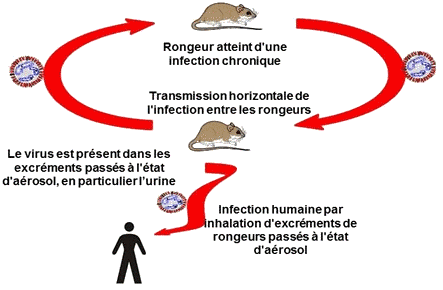
Figure 1: Illustration of the typical transmission cycle of hantaviruses
Hantavirus pulmonary syndrome
Hantavirus pulmonary syndrome is a disease caused by inhaling the feces of infected wild mice. In Canada, the majority of hantavirus pulmonary syndrome cases occur in the western provinces—British Columbia, Alberta, Saskatchewan, and Manitoba—and the primary cause of the disease is the Sin Nombre virus. Only one case of hantavirus pulmonary syndrome has been documented in eastern Canada (in Quebec); however, wild mice infected with the Sin Nombre virus have been found throughout the country. Although cases are rare (the number of cases per year ranges from 0 to 13, and the total number of confirmed cases in Canada currently stands at 109), the case-fatality rate among infected individuals is approximately 30 %. The majority of cases occur in the spring and early summer, indicating that risk factors for viral exposure are seasonally related.
In 2013 and 2014, a significant increase in the number of hantavirus pulmonary syndrome cases was observed; however, the cause of this increase remains unexplained. There are currently no antivirals or vaccines available, and treatment is supportive. Public education, rodent control, and the use of personal protective measures are essential to prevent infections in at-risk populations. Source:http://www.phac-aspc.gc.ca/publicat/ccdr-rmtc/15vol41/dr-rm41-06/ar-02-fra.php