future

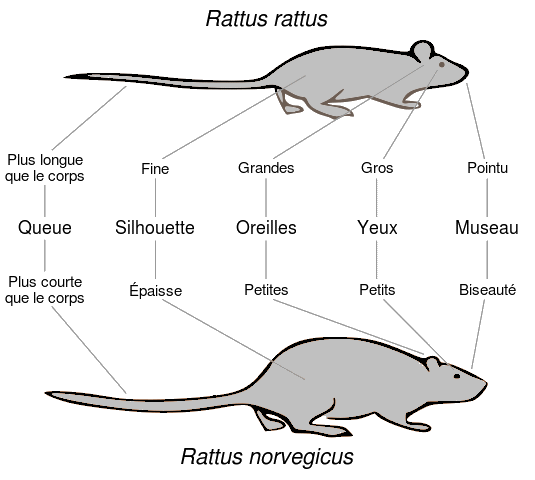
Info Rats - To fight an opponent you must know them, In this case, your opponents are the rats. You can never know how to effectively treat and combat rats if you do not know how their biology, habits, and lifestyle work. Do not lose sight of the fact that they are endowed with remarkable intelligence; they are organized and methodical. They have survived since the dawn of time against all predators, even against man with the most modern technologies; even the most advanced poisons fail to eradicate them.

Rats have well-developed senses of taste, smell, and touch. They have a keen sense of hearing, often using ultrasound to communicate, and are particularly sensitive to any sudden noise. Both species reproduce quickly and become sexually mature in about three months. Each female can produce 4 to 6 litters and between six and eight young in a year. Rats must gnaw to keep their teeth, particularly their constantly growing incisors, worn down. They damage woodwork, plastic, brick, and lead pipes, and strip electrical cables.
Rats can cause a great deal of structural damage. They can cause serious fires by gnawing through insulation around electrical wires, flooding by puncturing pipes, and even death by chewing through gas lines. The insurance industry estimates that damage caused by rodents to wiring accounts for 25% of all electrical fires in buildings.

Visual_rat
Diseases transmissible directly to humans by rodents are spread through bites, consumption of contaminated food or water, rodent excrement, contact with surface water contaminated by urine, or by breathing in germs present in rodent urine and droppings stirred up into the air (aerosolization). Rodent diseases are also indirectly spread to humans by ticks, mites, and fleas that transmit the infection directly to humans through food infestation.